
|
GROW AS YOU SLEEP
THE ANABOLIC EFFECTS OF ZMA
by Victor Conte
Muscular Development July 2000
|
 |
ZMA is an effective new sports performance
product that has been clinically proven to increase anabolic
hormone levels and muscle strength in trained athletes.
(1,2) ZMA is the first "nighttime anabolic formula" developed
specifically to enhance recovery by improving sleep efficiency.
Many athletes fail to realize how important it is to get
a deep and restful sleep. Healing, tissue repair, anabolic
hormone production and muscle growth are maximized during
sleep, so quality sleep is extremely important to athletes.
What is ZMA?
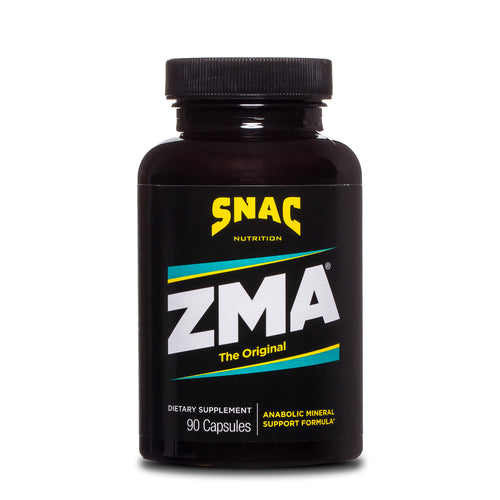
ZMA is a scientifically designed, university
laboratory tested anabolic mineral support formula. ZMA
contains zinc monomethionine aspartate plus magnesium aspartate
and vitamin B-6 in precise ratios and is recommended to
be taken 30-60 minutes before bedtime. ZMA is patent pending
all natural product that is manufactured utilizing a unique
proprietary process, which significantly enhances the absorption
and utilization of both the zinc and magnesium.
Do world-class athletes use ZMA?
World class athletes are reporting tremendous
benefits from ZMA, in the gym, as well as on the athletic
field. For example, more than 250 NFL players are currently
taking ZMA. Lester Archambeau, starting defensive end for
last year's NFC Champion Atlanta Falcons, says he is "extremely
satisfied with ZMA. ZMA definitely helps me recover! I can
tell when I take it and when I don't. There is no doubt
that it makes me sleep better." And when it comes to the
gym, the big Falcon claims, "I have much better endurance
when taking ZMA." Bryce Paup, Jacksonville Jaguar's multi-All
Pro defensive end and 1995 Defensive Player of the Year
(he led the NFL with 17.5 sacks) has also been taking advantage
of ZMA. Paup says, "When I take ZMA, I sleep better and
more soundly, and I feel more rested when I wake up." And
when it comes to the football field, Paup claims, "The more
I rest and the better I sleep, the better I perform on the
field."
In addition to the professional football players,
more than 25 IFBB pro bodybuilders have benefited from using
ZMA. Flex Wheeler (1999 Arnold Schwarzenegger Classic Champion)
says "I can't believe how much better I feel using ZMA.
I have greater output. I'm stronger in everything. I wake
up very well rested, and my workouts have gone better!"
Michael Ashley (1990 Arnold Schwarzenegger Classic Champion)
claims "ZMA is the most effective recovery supplement I've
used in my entire bodybuilding career! A deep and restful
sleep is the secret to maximizing the anabolic process."
Does exercise effect sleep?
Studies involving the effects of different
types and duration of exercise on sleep efficiency have
yielded conflicting results. However, in a study of the
effects of power exercise on the sleep of a group of trained
power lifters, the tendency was for this type of more strenuous
exercise to affect sleep adversely. (3) Excessive training
has also been reported to cause sleep disturbances as well
as mood changes, and the sleep disruption was greater at
higher training volumes. (4) In addition, long duration
daytime exercise of moderate intensity has been shown to
decrease GH and testosterone production during nighttime
sleep. (5)
Does age effect sleep?
Sleep quality declines with age, with progressively
less time in deep or slow wave sleep (SWS), which occurs
during the initial part of sleep. Age related declines also
occur in lean body mass, growth hormone (GH) and insulin-like
growth factor 1 (IGF-1). (6) In normal young adults, a major
burst of growth hormone occurs shortly after sleep onset,
in association with the first period of slow wave sleep.
In men, approximately 70% of the daily GH output occurs
during this period of early sleep throughout adulthood.
(7) Extensive evidence also indicates the existence of a
consistent relationship between increased SW sleep (stages
3 and 4) and increased GH secretion and, conversely, between
awakenings and decreased GH release. Pharmacological stimulation
of SW sleep results in increased GH release, and compounds
which increase SW sleep represent a new class of GH secretion
stimulators.
How does ZMA effect sleep?
In a study of patients with mild or moderate
insomnia, it was found that sleep efficiency was significantly
improved with oral magnesium therapy. (8) Researchers have
also reported that chronic sleep deprivation causes magnesium
deficiency as well as decreased exercise tolerance. However,
these researchers also found that that the decreased exercise
tolerance observed as a result of sleep deprivation could
be significantly improved by oral magnesium administration.
(9) ZMA contains magnesium aspartate, which is highly bioavailable,
and studies have shown this form to have a superior rate
of absorption compared to other forms. (10)
Does exercise effect testosterone levels?
First of all, it's a widely held misconception
that exercise increases testosterone levels. In fact, prolonged
exercise decreases the production of testosterone by approximately
10%.(11) Many studies have reported post-exercise increases
in serum testosterone levels, however, what they're measuring
is only a temporary false elevation. This is because exercise
causes significant decreases in plasma volume, hepatic plasma
flow and the metabolic clearance rate of testosterone. This
is the reason it's extremely important to measure testosterone
levels in a rested state during the early morning as opposed
to post exercise. A large percentage of the testosterone
secreted daily occurs during sleep and levels peak during
the early morning and decrease throughout the day by 25%
to an evening minimum. (12)
The following analogy may be helpful in explaining
the effect of exercise on testosterone levels. Imagine that
there's a hose bringing testosterone into a bathtub, which
represents testosterone production, and you decrease the
flow of the hose by 10%, which represents the effects of
exercise. If you restrict the drain flow at the same time
by 30%-a reduction in metabolic clearance rate of testosterone-the
level of testosterone will briefly appear to be elevated.
However, this is only a short-term effect of exercise and
clearly represents a false elevation.
Does age effect testosterone levels?
Testosterone levels significantly decline
with age. Serum testosterone concentrations were examined
from over 4,000 military veterans and their testosterone
levels dropped by more than 30% from age 32 to age 44. (13)
In another study of over 1,400 men aged 20-60 years old,
testosterone levels showed a significant stepwise decrease
with age (p < 0.001) starting with the early adult years.
(14)
How does ZMA effect testosterone levels?
The connection between zinc and testosterone
has been known for more than 15 years now. For example,
in a study published back in 1982, kidney failure patients,
who are typically zinc deficient, were supplemented with
zinc for a period of six months, and their testosterone
levels increased by 85%. (15) In a more recent study conducted
in 1996 called "Zinc Status and Serum Testosterone Levels
of Healthy Adults", the researchers found that 30 mg per
day of zinc supplemented to the diets of healthy American
men experiencing moderate zinc deficiencies doubled their
testosterone levels in 6 months. (16)
An independent study of ZMA was recently conducted
at Western Washington University under the direction of
sports performance researcher, Lorrie Brilla, Ph.D. A group
of 12 competitive NCAA football players who took ZMA nightly
during an 8 week spring training program had over 30% increases
in free and total testosterone levels compared to more than
10% decreases in the placebo group of 15. (1)
Does exercise effect growth hormone levels?
Single measurements of growth hormone are
not very useful, so insulin-like growth factor 1 (IGF-1)
levels, which are protein bound and more stable, are usually
measured as an indicator of growth hormone status. Prolonged
intensive exercise leads to significantly reduced IGF-1
levels. In a study of 9 subjects training as gymnasts, a
24% decrease in the IGF-1 concentrations were found after
3 days of intensive exercise. (17) In another study of 38
young males involved in a 5 week program of intense physical
training, the subjects IGF-1 levels decreased by an average
of 12%. (18)
Does age effect growth hormone levels?
Growth hormone levels significantly decline
with age. It has been published that growth hormone levels
decline by 50% every seven years from age 21. (19) For example,
if your IGF-1 level at age 21 was 400 ng/mL, then it would
be at 200 ng/mL at age 28 , 100 ng/mL at age 35, and 50
ng/mL at age 42. So at age 42, your IGF-1 level would be
about 1/8 th of the level it was at 21 years old.
How does ZMA effect growth hormone levels?
The chief synergists of growth hormone include
zinc, magnesium, testosterone and insulin, whereas its chief
antagonist is cortisol. (20) Zinc and magnesium supplementation
have both been reported to significantly reduce plasma levels
of the catabolic "stress" hormone cortisol by 59% and 25%,
respectively. (21, 22) Zinc supplementation has also been
reported to have a very positive effect upon IGF-1 levels
in humans. For example, in a study of growth retarded children,
the zinc treated children's IGF-1 levels increased by 47%
after 1 month and 70% after 5 months of supplementation.
(23) In the recent ZMA study conducted by Dr. Brilla, the
NCAA football players who took ZMA nightly had a 3.6% increase
in IGF-1 levels compared to a substantial 21.5% decrease
in the placebo group. (1)
How does ZMA effect muscle strength?
In addition to measuring the anabolic hormone
increases in the football players, Dr. Brilla measured their
muscle strength and functional power increases. Pre and
post leg strength and power measurements were made using
a Biodex isokinetic dynamometer. The players who took ZMA
nightly during the 8 week period of intensive training had
2.5 times greater strength gains than the placebo group.
The muscle strength of the ZMA group increased 11.6% compared
to a 4.6% increase in the placebo group. The ZMA group also
had two times greater functional power gains compared to
the placebo group. The functional power of the ZMA group
increased 18.2%, in contrast to 9.4% for the placebo group.
(1,2)
How prevalent are zinc and magnesium deficiencies
in athletes?
Zinc and magnesium deficiencies are common
in the general population and even more prevalent in athletes.
Through an extensive search of worldwide medical research
data, we discovered that rigorous exercise and stress results
in significant bodily losses of zinc and magnesium.
For example, in a study called "Serum Zinc
in Athletes in Training," serum zinc was determined in 160
training athletes-103 males and 57 females. In 23.3% of
the males and 43% of the female athletes, serum zinc was
significantly below the "normal range."(24)
In addition, in a study called "Biochemical
Indices of Selected Trace Minerals in Men: Effect of Stress,"
blood (plasma) levels of zinc and other trace minerals were
determined in 66 men before and after a 5 day period of
sustained physical and psychological stress. Zinc levels
decreased by 33%! (25)
In another study called "Magnesium, Zinc and
Copper status of 270 US Navy Sea, Air and Land (SEAL) trainees"
conducted by the US Department of Military Medicine, it
was shown that the blood concentrations of magnesium and
zinc were significantly below the "normal range" for 23%
and 24% of the trainees, respectively.(26)
Furthermore, in 1998, BALCO Laboratories tested
the mineral status of over 250 NFL players, including the
entire Denver Broncos Super Bowl championship team, as well
as the entire Miami Dolphin team. Over 70% of the players
were either depleted or deficient in both zinc and magnesium.
The NCAA football players in the ZMA study
also had reduced baseline blood levels of both zinc and
magnesium. However, eight weeks of ZMA supplementation was
very effective in optimizing their levels of these elements,
which resulted in dramatic increases in the anabolic hormone
levels and muscle strength of the athletes. (1)
Don't athletes get enough zinc and magnesium
from foods?
The main reason for baseline deficiencies
in the both the general population and in serious athletes
is that it's difficult to get proper amounts solely through
the intake of whole foods. USDA studies show that 68% of
self-selected diets contain less than two thirds of the
RDA for zinc (27) and 39% contain less than two-thirds of
the RDA for magnesium. (28) While zinc and magnesium are
contained in a wide variety of foods, it's been my experience
that athletes don't acquire sufficient quantities through
their normal diets. One reason may be that foods high in
these minerals aren't necessarily the most desirable. For
example, the best food sources for zinc include oysters
and beef liver. These foods just aren't consumed by most
athletes, nor should they be.
Don't athletes get sufficient zinc and magnesium
from their multiple vitamin/mineral supplements?
In a study called "The effect of 7 to 8 months
of vitamin/mineral supplementation on the vitamin and mineral
status of athletes," blood indicators of eight vitamins
(B1, B2, B6, C, E, A, B12, folate) and six minerals (Cu,
Mg, Zn, Ca, P) were measured in 86 athletes before and after
a 7-to 8 month period of training. (29) During this period,
half consumed a multi-vitamin/mineral supplement and a matched
group took a placebo. Following the supplementation period,
blood indicators of B1, B6, B12 and folate status all increased,
but there were no effects of supplementation on the blood
levels of any of the minerals. Zero effect! This is because
of the competitive and antagonistic interactions that prevented
absorption. The authors concluded that "7 to 8 months of
multi-vitamin/mineral supplementation did not effect any
of the blood mineral levels".
Conclusion
ZMA is rapidly becoming the preferred natural
testosterone boosting supplement by many strength athletes.
As more athletes begin to truly understand the processes
of maximizing recovery, healing, tissue repair, anabolic
hormone production and muscle growth, they'll join those
already spreading the ZMA gospel "You Grow As You Sleep!"
Please be advised that imitation Zinc Magnesium
Aspartate products are NOT THE SAME AS ZMA and may not produce
the same results obtained in the ZMA study.
ZMA was developed by Victor Conte, founder
and director of BALCO Laboratories in Burlingame, California,
which has been in existence for more than 18 years. BALCO
specializes in mineral and trace element assessment and
performs research with elite Olympic and professional athletes.
Victor routinely provides consultation for several hundred
elite athletes from a variety of sports including football,
baseball, bodybuilding, basketball, tennis, hockey, track
and field, swimming and soccer.
References
1. Brilla LR, Conte, V. A novel zinc and magnesium
formulation (ZMA) increases anabolic hormones and strength
in athletes. Sport Med Train and Rehab (in press). Abstract
presented November 14, 1998 at the 18th Annual Meeting of
the S.W. Chapter of the ACSM.
2. Brilla LR, Conte, V. Effects of zinc-magnesium (ZMA)
supplementation on muscle attributes of football players.
Med and Sci in Sports and Exercise, Vol. 31, No. 5, May
1999
3. Montgomery I, et al. Acta Physio Scand Suppl, 1998, 574:
36-40.
4. Taylor SR, et al. Med Sci Sprts Ecrtc, 1997 May, 29:5,
688-93.
5. Kern W, et al. J Appl Physiol, 1995 Nov, 79:5, 1461-8.
6. Prinz PN, et al. J Gerontol A Biol Sci Med Sci, 1995
July, 50:4, M222-6.
7. Van Cauter E, et al. Sleep, 1998 Sep, 21:6,553-66.
8. Hornyak M, et al. Sleep, 1998 Aug, 21:5,501-5.
9. Tanabe K, et al. Jpn Circ J, 1998 May, 62:5, 341-6.
10. Disch G, et al. Arzneimittelforschung, 1994, 44.5:647-650.
11. Cadoux-Hudson TA, et al. Eur J Appl Physiol, 1985, 54
(3): 321-5.
12. Tietz N. Clinical guide to laboratory tests. W.B. Saunders,
1995, page 579.
13. Dabbs J. Chronobiol Int, 1990, 7:3, 245-9.
14. Simon D, et al. Am J epidemiol, 1992 Apr, 135:7, 783-91.
15. Mahajan, SK, et al. Ann Intern Med, 1982, 97.3, 357-61.
16. Prasad A, et al. Nutrition, 1996, 12.5:344-48.
17. Jahresis G, et al. Growth Regul, 1991 Sep,1:3,95-9.
18. Eliakim A, et al. Am J Physiol, 1998 July, 275:1 Pt
2, R308-14.
19. Veldhuis JD, et al. Sleep, 1996 Dec, 19:10 Suppl, S221-4.
20. Kutsky RJ. Handbook of vitamins, minerals and hormones.
Van Nostrand. Pgs. 307-13.
21. Brandao-Neto J, et al. Bio Trace Elem Res, 1990, Vol
24, 83-89.
22. Golf SW, et al. Clen Chem Cen Biochem, 1984, Vol. 22,
717-21.
23. Ninh NX, et al. Am J Clin Nutr, 1996, 63:514-19.
24. Haralambie G, et al. Int J Sports Med, 1981, 2:135-138.
25. Singh A, et al. Am J Clin Nutr, 1991, 53:126-31.
26. Singh A, et al. Am J Clin Nutr, 1989 Apr, 49:695:700.
27. Holden JM, et al. J Am Diet Asso, 1979, 75.1:23-28.
28. Morgan KJ, et al. J Am Coll Nutr, 1985, 4.2:195-206.
29. Telfoed RD, et al. Int J Sport Nutr, 1992 Jun, 2:2,123-34.
|