
|
Effects of a Novel Zinc-Magnesium Formulation
on Hormones and Strength
L.R. BRILLA1 AND
VICTOR CONTE2
1Exercise and Sports Science Laboratory, Western Washington
University, Bellingham, WA 98225-9067 and
2BALCO Laboratories, 1520 Gilbreth Road, Burlingame, CA
94010, Tel: 800-777-7122
L.R. BRILLA AND VICTOR CONTE. Effects
of a Novel Zinc-Magnesium Formulation on Hormones and Strength.
JEPonline, 3(4): 26-36, 2000. Muscle attributes and selected
blood hormones of football players were assessed in response
to a nightly supplementation regimen during spring football,
over an 8-week period, with pre-post measures. A double-blind
randomized study was conducted with ZMA (30 mg zinc monomethionine
aspartate, 450 mg magnesium aspartate, and 10.5 mg of vitamin
B-6) and placebo (P), n=12 and n=15, respectively. Plasma
zinc and magnesium levels were ZMA (0.80 to 1.04 g/ml; 19.43
to 20.63 mcg/ml ) and P (0.84 to 0.80 g/ml ; 19.68 to 18.04
g/ml), respectively (P<0.001). Free testosterone increased
with ZMA (132.1 to 176.3 pg/mL), compared to P (141.0 to
126.6 pg/mL) (P<0.001); IGF-I increased in the ZMA group
(424.2 to 439.3 ng/mL) and decreased in P (437.3 to 343.3
ng/mL) (P<0.001). Muscle strength via torque measurements
and functional power were assessed with a Biodex dynamometer.
Differences were noted between the groups (P<0.001): ZMA
(189.9 to 211 Nm at 180º/s and 316.5 to 373.7 Nm at 300º/s)
and P (204.2 to 209.1 Nm at 180º/s and 369.5 to 404.3 Nm
at 300º/s). The results demonstrate the efficacy of a Zn-Mg
preparation (ZMA) on muscle attributes and selected hormones
in strength-trained, competitive athletes.
Key Words: vitamin B6, anabolic hormones,
testosterone, IGF-I, muscle
INTRODUCTION
Zinc (Zn) and magnesium (Mg) may enhance
levels of Insulin-like Growth Factor-I (IGF-I)(1); and zinc,
in particular, may contribute to elevating serum testosterone
(2). Both IGF-I and testosterone are anabolic factors that
enhance muscle function and physical performance. Testosterone's
role in physical performance enhancement has been studied
for a number of years. The IGF-I response to intense muscular
activity has not been well defined, relatively. Training
may lead to a short-term catabolic state hormonally expressed
by reductions in IGF-I. Baseline serum concentrations of
testosterone, GH, and IGF-I were unaffected by 16-wk resistive
training program which elicited an approximate 40% increase
in muscular strength in men, 60 4 yr. It was intimated that
training-induced increases in IGF-I could occur in muscle
without altering serum IGF-I concentration (3).
A condition named somatopause due to
decreased IGF-I and GH has been identified with aging. To
countermeasure somatopause, 33 moderately obese women (67.1
5.2 yr), self-injected IGF-I. Weight loss with muscle strength
increases were greater in IGF-I group due to training (12-wk:
walk 3 days, strength trained 2 days) (4). IGF-I may mediate
the action of GH on skeletal muscle as a paracrine agent.
In male rats, larger mean muscle weight and fiber cross-sectional
area occurred when functional overload was combined with
GH/IGF-I administration, and myonuclear number increased
concomitantly with fiber volume. Increases in myonuclear
numbers in rats may be a prerequisite for prolonged and
substantial skeletal muscle fiber hypertrophy (5). IGF-I
plus exercise resulted in an increase in the size of each
predominant fiber type (I, IIa).
In contrast, the nutrients, Zn and Mg,
may not be at optimal status in physically active individuals
to facilitate function of these anabolic factors. Zn losses
may be exacerbated through exercise (6), both long duration
and high intensity, sweating (7), and inadequate intake
(8). Additionally, exogenous testosterone administration
results in significant reductions of Zn (9). Also, Mg has
a putative effect on muscle strength in clinical applications
and previously untrained individuals (10). Mg may be reduced
due to intense and/or long-term exercise (10). These diminutions
in Zn and Mg may lead to a situation of latent fatigue with
decreased endurance (7,10,11). A special aspect of the zinc-magnesium
supplement used in this study was the inclusion of vitamin
B6 to enhance the absorption of Zn and Mg (12,13), in addition
to the known properties of vitamin B6 in protein metabolism.
Both of these minerals have been reported
by the USDA to be low in typical diets: 68% of diets have
less than two-thirds of the RDA for Zn and 39% contain less
than two-thirds of the RDA for Mg. Some dietary surveys
of athletes have demonstrated that these nutrients may meet
the RDAs (2,14). It may be necessary for athletes to supplement
these nutrients in order to get dietary adequacy through
meeting the RDA, or beyond, for physical performance effects.
The purpose of this study was to assess the effect of a
novel Zn, Mg, and vitamin B-6 formulation (ZMA) on anabolic
hormones and muscle function in varsity football players
during their spring football practice season.
METHODS
After approval of the project by the
Western Washington University (WWU) Human Subjects Committee,
the study commenced with the recruitment of subjects from
the WWU football team, NCAA, Division II. Varsity football
players were solicited for a randomized, double blind supplementation
study. Fifty-seven players were involved in the initial
testing which included anthropometric data, a 3-day diet
analysis with Nutritionist IV software to determine dietary
intake of nutrients of interest, a venipuncture blood draw,
and muscle isokinetic torque and power assessments. All
investigators were appropriately trained in the various
aspects of the testing protocols. Anthropometric data collection
was supervised by an individual trained in kinathropometric
troika methodology. A Certified Nutrition Specialist conducted
the nutrition analysis. The blood draws were completed by
trained phlebotomists. The isokinetic data was collected
by trained and experienced testers, one with 15 years experience.
Twenty-seven players completed the supplementation regimen
and testing so their data were included in the analysis.
Activity consisted of supervised spring football practice.
All tests were performed pre-post the
spring practice season, for a total supplementation period
of seven weeks. The first week was familiarization with
the practice routine and the assessments were made at the
first and eighth weeks. No intervening samples were taken
because of the variability of such elements as zinc and
magnesium for tissue saturation or steady state to be reached,
approximately 3-5 weeks depending on baseline status. All
subjects were tested between 0700 and 1030, with the isokinetic
testing held between 1030 and 1330. Since the study was
randomized, double-blinded, the tests were not controlled
by group although it was attempted to test each subject
at the same time of day, pre-post. Subjects reported to
the lab, in the vicinity of the weight room, weekly to pick
up their supplements. Subjects had been randomly assigned
to one of two groups: control who took a placebo and treatment
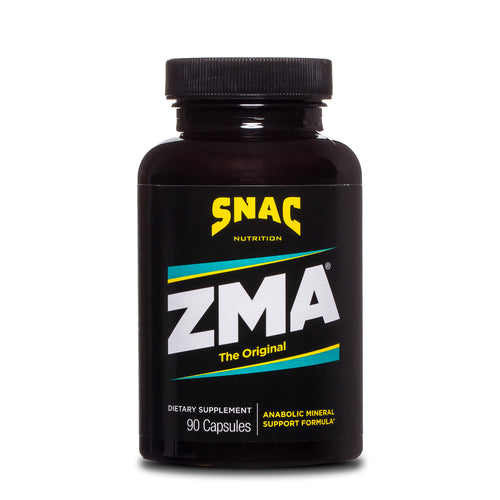
who took the supplement, ZMA (SNAC System, Inc., Burlingame,
CA), the equivalent of 30 mg zinc monomethionine aspartate,
450 mg magnesium aspartate, and 10.5 mg vitamin B-6. All
subjects took three capsules nightly between dinner and
bedtime. Failure to comply with the supplementation regimen
resulted in subjects being dropped from the study. The players
were asked to not take any other nutrient supplements during
the course of the study. This request was monitored by-weekly
questioning when they picked up their supplement/placebo.
A 10-hour fasting blood sample was obtained early-morning
via venipuncture before any physical activity was undertaken.
Blood samples were prepared for analysis of plasma zinc
and magnesium, and serum insulin-like growth factor-1 (IGF-I),
total testosterone, free testosterone, and percent testosterone.
The specimen-preparation method used
for plasma zinc and magnesium analysis was a 50/50 nitric/perchloric
acid digestion. The instrumentation used in the analysis
was an inductively coupled plasma atomic emission spectrometer
(ICP/AES) (Applied Research Laboratories, Dearborn, MI;
model 34000 simultaneous ICP). The detection limits of the
ICP-AES for Zn and Mg are 0.009 and 0.014 parts per million
(ppm), respectively. The ICP-AES inter-assay precision was
determined from 20 assays on human plasma pools. The standard
deviation and coefficient of variation (%CV) were 0.05 ppm
and 5.9% for Zn and 1.0 ppm and 4.4% for Mg. Following organic
extraction, a competitive radioimmunoassay (RIA) which uses
the I125 isotope as the competing antigen was the method
used in the analysis of total and free testosterone. The
instrumentation used was a dialysis beta counter. The precision
for the quality control samples ranged from a high of 335
ng/dL with a standard deviation (SD) of 27 and %CV of 8.0%
to low sample of 13.8 ng/dL with SD 1.26 and %CV of 9.2%.
IGF-I analysis was done through a combination of equilibrium
dialysis, extraction, chromatography, and radioimmunoassay
(RIA) with use of a gamma counter. The sample reproducibility
for this methodology ranges from high pool of 688 22.6 ng/mL
and %CV of 3.3%, to a low pool ng/mL SD of 10.1 and %CV
of 8.3%. These quality control values meet the acceptable
criterion of coefficient of variation of less than 15.0%.
Torque and power measurements were preformed with the lower
extremity on a BIODEX isokinetic dynamometer. The set-up
was adjusted for each subject, and the same subject positions
were recorded to use pre and post. Three trials were given
at two separate settings: 180 /s and 300 /s. Torque and
power data were recorded from the best trial.
Means and standard deviations were calculated.
A MANOVA was used to assess the mineral and hormone data
sets. ANCOVA was used to test for muscle attributes of torque
and power. P was set at <0.05. For significant interactions,
multiple pairwise comparisons with a Bonferroni adjustment
were used.
RESULTS
Data sets were completed on 27 subjects
with resultant group sample sizes of ZMA: 12, P: 15. The
attrition may be accounted for through inability to comply
with supplementation regimen, injuries, and aversion to
testing such as phlebotomy. Any injuries were documented
with the athletic training staff. Other factors were self-report.
Body weights were 99.1 kg and 99.0 kg, pre-post in the ZMA
group, and 95.9 kg and 95.6 kg, pre-post in placebo subjects.
Diet records (3-day) showed that mean values of selected
nutrients exceeded the RDA for Zn (17.0 7.4 mg), Mg (539
272 mg), and vitamin B-6 (3.6 1.6 mg). There was a significant
treatment by group interaction effect (P<0.001) for plasma
values of zinc, magnesium, and the serum anabolic hormone
profile, except percent testosterone. Subject characteristics
plus mineral and hormone data are presented in Table 1.
Graphical display of the specific variables is provided
in Figure 1. Statistical comparisons of the significant
interactions of the mineral and hormone data are presented
in Table 2. Overall, control values dropped and ZMA supplemented
values increased for within groups comparisons, pre-post
changes (P<0.0125, Bonferroni adjustment). For the between
groups analysis, no pre test comparisons were significant.
These findings demonstrate that the groups were comparable
at the commencement of the study for the plasma measures.
However, the post analysis showed significant differences
in all comparisons, except for a trend towards significance
for IGF-I (P=0.0195) with the Bonferroni adjustment. These
findings indicate that ZMA reverses the drops in these nutrients
and anabolic hormones seen with an intensive 8-week training
program such as spring football practice.
Table 1. Subject characteristics and
measures for selected minerals and anabolic hormones (Mean
SD).

Table 2. Post hoc comparison probabilities
for significant treatment by group interactions in minerals
and hormones.
Torque and power measures of the quadriceps
and hamstrings were significantly different between placebo
and treatment with ZMA (P<0.05). An ANCOVA was performed
for the discrete measures after it was demonstrated from
graphical display and initial group mean values that there
was a discrepancy in baseline mean values observed which
might have masked true differences in response to training
and treatment on the muscle function data. The ANCOVA results
(P<0.05) showed a more prominent increase in the ZMA group
than the placebo subjects, except for 300 /s torque measures
for right quadriceps and hamstrings. Measurements and statistical
results are presented in Table 3. Figure 2 presents percent
change in isokinetic torque and power measurements that
show the consistent greater improvements in the ZMA supplemented
group compared to the placebo group, when baselines are
relative.
DISCUSSION
Varsity football players were solicited
for a randomized, double blind supplementation study. Of
57 subjects who initially volunteered for the study, 27
successfully followed the nightly supplement regimen over
the course of the study and completed the testing sessions.
The attrition was due to the need for compliance not only
with the supplement and placebo regimen, but also with subsequent
blood sampling. There were also some injuries that occurred
that prohibited some players from participating fully in
practices and/or follow-up muscle function testing. The
resultant groups were 15 players on the placebo and 12 with
the supplement treatment. The supplement was ZMA, a novel
preparation of 30 mg zinc monomethionine aspartate, 450
mg magnesium aspartate, and 10.5 mg vitamin B-6.
Post blood samples and muscle function
measures were obtained for comparison to the baseline testing.
The results of ZMA supplementation on anabolic hormone profile
in football players pre-post spring football practice indicates
an amelioration of the anabolic hormones so that the ZMA
group had increased concentrations of total testosterone,
free testosterone, and IGF-I compared to plateaus or drops
in the placebo group. Free testosterone levels have been
positively correlated with IGF-I levels (15) and muscle
mass (16). Previous research has demonstrated that testosterone
responds to intense muscular activity through a decline
over time (17) or no significant change (18). Elevated levels
of testosterone may be accounted for by exercise-induced
changes in plasma volume, therefore no significant differences
are demonstrated when hemoconcentration is considered. The
subjects in this study were well hydrated in a temperate
environment, and tested at least 24 hours after the last
strenuous workout of spring football practice.
The preliminary evidence from the results
of the present study indicates that simple nutritional supplementation
with ZMA may improve the anabolic hormone profile of athletes
engaging in intense physical activity. Zinc plays an essential
role in androgen metabolism and interaction with steroid
receptors (19). Zinc deficiency in male rats reduced circulating
luteinizing hormone and testosterone concentrations, by
34% and 68%, respectively. The livers of zinc-deficient
rats exhibited a higher aromatization of testosterone to
estradiol than did those of controls (19). Concentration
of hepatic estrogen receptors in the liver cytosol was significantly
higher in zinc deficiency. Zinc deficiency has deleterious
effects similar to those of alcohol or castration on hepatic
androgen metabolism and aromatization of androgens. Zinc
deficiency caused a 41% reduction in the number of androgen
binding sites and a 57% increase in the number of estrogen
receptors. Zinc maintains the structural integrity of DNA
and plays an important role in synthesis of nucleic acid
and protein (2). In the present study, the reverse action
of deficiency, Zn supplementation, was used to determine
effects on anabolic hormones, with positive effects demonstrated
on testosterone. Direct muscle function studies with manipulation
of zinc status over a short time interval of 3 weeks demonstrated
that zinc status positively alters the total work capacity
of skeletal muscle in humans (20). The present study results
contribute to those findings, although the preparation used
in this study was more complex including magnesium and vitamin
B-6 as well as zinc.
Exquisite sensitivity of circulating
IGF-I to nutrients has been observed. Nutrition is one of
the main regulators of circulating IGF-I, which is lowered
by energy and/ or protein deprivation (21). Enhanced nitrogen
balance is demonstrated in caloric restriction with IGF-I
administration. IGF is putatively strongly linked to diet,
specifically carbohydrate content in caloric restriction.
Although most research attention has been on the energy
and macronutrient content of the diet, there have been studies
that evaluated specific nutrients on IGF-I levels. When
purported growth hormone enhancers, arginine and lysine,
were administered together with a strength training program,
there was no change in resting levels of IGF-I (22). The
strongest associations may be between IGF-I and micronutrient
levels. Increase in growth velocity in growth-retarded children
resulted from zinc supplementation associated with a 70%
increase in plasma IGF-I concentration (23). Zinc and magnesium
deficiencies lead to marked growth retardation. In a study
using rats, dietary zinc and magnesium were manipulated
to assess effects on IGF- I (1). When animals were deprived
of magnesium, serum magnesium was reduced 76% and serum
IGF-I decreased 60% from baseline. Then, diets were replete
with magnesium. The serum magnesium normalized, then 2 weeks
later, IGF-I reached control levels. When animals were deprived
of zinc, serum zinc was reduced 80% and serum IGF-I decreased
69% from baseline. With dietary zinc repletion, serum IGF-I
improved 194%. The researchers concluded that decreased
IGF-I was not attributed to reduced energy intake, but seems
to be a specific effect of nutritional deficiency of magnesium
and/or zinc. Growth retardation in hypocaloric states may
be due to magnesium or zinc deficiency mediated through
reduced serum IGF-I. Serum changes of magnesium and zinc
might be of importance as a mediator for regulating serum
IGF-I levels. These studies on specific nutrients, specifically
zinc and magnesium, were corroborated with the results of
the present study. The element levels were low at the start
of the study and increased, but remained within the normal
laboratory ranges. Supplementation with ZMA, a novel zinc-magnesium
combination, resulted in increased plasma element concentrations
and concomitant stabilization of IGF-I levels compared to
the placebo group, which demonstrated significant reductions
in IGF-I mean values over the training period.
Both zinc and magnesium supplementation
have been shown to significantly decrease the levels of
the catabolic "stress" hormone, cortisol. In a double blind,
randomized study of 23 triathletes, serum cortisol was lower
in the magnesium-supplemented group before and after competition
compared to controls (24). The authors concluded that the
magnesium supplementation resulted in a reduced stress response
without affecting competitive potential. In addition to
increasing the football players anabolic hormone levels,
the ZMA may have had an anti-catabolic effect as well. It
would be beneficial to include cortisol measures in future
studies.
Related to the improved hormone profile
were enhanced posttest values of muscle measures with ZMA.
There were relatively greater values with ZMA than placebo
in lower extremity isokinetic torque and functional power
(180 /s and 300 /s, except for torque at 300 /s) compared
to baseline measures as demonstrated in Figure 2.
There is extensive evidence that the
anabolic hormones supported by the nutriture of the ZMA
supplementation are involved in muscle anabolism and related
force production changes (2, 10, 20, 21, 23, 24). Virtually
every tissue type is capable of autocrine production of
the IGFs. Elevated IGF-I may contribute to hypertrophy response,
possibly via mobilization of satellite cells to provide
increases in muscle DNA, maintaining some critical DNA-to-protein
ratio (25). Increased IGF-I production coincides with increases
in muscle DNA and precedes measurable increases in muscle
protein. IGF-I may be acting to directly stimulate processes
such as protein synthesis and satellite cell proliferation,
which result in skeletal muscle hypertrophy. Purported ability
of IGF-I to stimulate both anabolic and myogenic effects
in vitro suggests it as a component of cellular-level signaling
system in skeletal muscle. After acute exercise, IGF-I receptor
mRNA was elevated. The main function of IGF-I is to regulate
cellular growth and metabolism; IGF-I stimulates DNA synthesis,
cell proliferation, and protein synthesis. The anabolic
effects of testosterone are mediated primarily through protein
synthesis and retarding muscle catabolism, as has been clearly
defined over the years (26).
Related to the ZMA supplementation-induced
enhanced blood profile of zinc, magnesium, and anabolic
hormones were significant increases in isokinetic torque
and power measurements. The ZMA group increases were significantly
different than the placebo group. On a relative scale, the
10%-range increases in quadriceps torque and 12.7% to 15.2%
increases in quadriceps power for ZMA supplementation were
comparatively greater compared to the -0.8% to 2.4% change
in quadriceps torque and 8.6% to 10.8% change in quadriceps
power for the placebo group. There was a baseline difference
in muscle torque and power as a result randomization, which
resulted in higher values for the placebo group versus the
treatment group at the outset. Further statistical analysis
was applied so that the significant differences between
groups were noted when analyzed with an ANCOVA. Both groups
had overall increases in the training and supplementation
period, but the ZMA supplementation resulted in greater
increases compared to the placebo.
The results of the study are intriguing,
since ZMA supplementation was associated with improved anabolic
hormone profile and muscle function in already strength-trained
varsity collegiate football players. Further research on
applications of the novel ZMA compound and related contributing
mechanisms would elucidate the effects demonstrated in this
preliminary study.
REFERENCES
1. Dorup I, Flyvbjerg A, Everts ME,
Clausen T. Role of insulin-like growth factor-1 and growth
hormone in growth inhibition induced by magnesium and zinc
deficiencies. Br J Nutr 1991:66:505-21.
2. Prasad AS, Mantzoros CS, Beck FW, Hess JW, Brewer GJ.
Zinc status and serum testosterone levels of healthy adults.
Nutr 1996:12:344-8.
3. Guezennec Y, Leger L, Lhoste F, Aymonod M, Pesquies PC.
Hormone and metabolite response to weight-lifting training
sessions. Int J Sports Med 1986:7:100-5.
4. Nicklas BJ, Ryan AJ, Treuth MM, Harman SM, Blackman MR,
Hurley BF et al. Testosterone, growth hormone and IGF-I
responses to acute and chronic resistive exercise in men
ages 55-70 years. J Sports Med 1995:16:445-50.
5. Thompson JL, Butterfield GE, Gylfadottir UK, Yesavage
J, Marcus R, Hintz RL et al. Effects of human growth hormone,
insulin-like growth factor I, diet and exercise on body
composition of obese postmenopausal women. J Clin Endocrinol
Metab 1998:83:1477-84.
6. Konig D, Weinstock C, Keul J, Northoff H, Berg A. Zinc,
iron, and magnesium status in athletes-influence on the
regulation of exercise-induced stress and immune function.
Exerc Immunol Rev 1998:4:2-21.
7. Cordova A, Navas FJ. Effect of training on zinc metabolism
-- changes in serum and sweat zinc concentrations in sportsmen.
Ann Nutr Metab 1998:42:274-82.
8. Hawley JA, Dennis SC, Lindsay FH, Noakes TD. Nutritional
practices of athletes -- are they sub-optimal? J Sports
Sci 1995:13:S75-81.
9. Carpino A, Sisci D, Aquila S, Beraldi E, Sessa MT, Siciliano
L et al. Effects of short-term high-dose testosterone propionate
administration on medium molecular-weight proteins of human
seminal plasma. Andrologia 1994:29:241-5.
10. Brilla LR, Lombardi VP. Magnesium in sports physiology
and performance. In: Kies CV, Driskell JA, editors. Sports
Nutrition: Minerals and Electrolytes, An American Chemical
Society Monograph. Boca Raton, FL: CRC Press, 1995:139-77.
11. Buchmann AL, Keen C, Commisso J, Killip D, Ou DN, Rognerud
CL et al. The effect of a marathon run on plasma and urine
mineral and metal concentrations. J Am Coll Nutr 1998:17:124-7.
12. Evans GW, Johnson EC. Effect of iron, vitamin B-6 and
picolinic acid on zinc absorption in the rat. J Nutr 1981:111:
68-75. 13. Wichnik A, Schroll A, Kollmer WE, Berg D, Wischnik
B, Wieshammer E et al. Magnesium aspartate as a cardioprotective
agent and adjuvant in tocolysis with betamimetics. Animal
experiments on the kinetics and calcium antagonist action
of orally administered magnesium aspartate with special
reference simultaneous vitamin B administration. Z Geburtshilfe
Perinatol,1982:186:326-34.
14. Clarkson PM, Haymes EM. Exercise and mineral status
of athletes -- calcium, magnesium, phosphorus, and iron.
Med Sci Sports Exerc 1995:27:831-43.
15. Erfurth EM, Hagmar LE, Saaf M, Hall K. Serum levels
of insulin-like growth factor I and insulin-like growth
factor-binding protein 1 correlate with serum free testosterone
and sex hormone binding globulin levels in healthy young
and middle-aged men. Clin Endocrinol 1996:44:659-64.
16. Grinspoon S, Corcoran C, Lee K, Burrows B, Hubbard J,
Katznelson L et al. Loss of lean body and muscle mass correlates
with androgen levels in hypogonadal men with acquired immunodeficiency
syndrome and wasting. J Clin Endocrinol Metab 1996:81:4051-8.
17. Hakkinen K, Keskinen KL, Alen M, Komi PV, Kauhanen H.
Serum hormone concentrations during prolonged training in
elite endurance-trained and strength-trained athletes. Eur
J Appl Physiol 1989:59:233-8.
18. McCall GE, Allen DL, Linderman JK, Grindeland RE, Roy
RR, Mukku VR et al. Maintenance of myonuclear domain size
in rat soleus after overload and growth hormone/IGF-I treatment.
J Appl Physiol 1998:84:1407-12.
19. Om A, Chung K. Dietary zinc deficiency alters 5 -reduction
and aromatization of testosterone and androgen and estrogen
receptors in rat liver. J Nutr 1996:126:842-8.
20. VanLoan MD, Sutherland, B., Lowe NM, Turnland JR, King
JC. The effects of zinc depletion on peak force and total
work of knee and shoulder extensor and flexor muscles. Int
J Sport Nutr 1999:9:125-135.
21. Thissen JP, Ketelslegers JM, Underwood LE. Nutritional
regulation of the insulin-like growth factors. Endocr Rev
1994:15:80-101.
22. Corpas E, Blackman MR, Roberson R, Scholfield D, Harman
SM. Oral arginine-lysine does not increase growth hormone
or insulin-like growth factor-I in old men. J Gerontol 1993:48:M128-33.
23. Ninh NX, Thissen JP, Collette L, Gerard G, Khoi HH,
Ketelsleger JM. Zinc supplementation increases growth and
circulating insulin-like growth fact I (IGF-I) in growth-retarded
Vietnamese children. Am J Clin Nutr 1996:63:514-9.
24. Golf SW, Bender S, Gruttner J. On the significance of
magnesium in extreme physical stress. Cardiovasc Drugs Ther
1998:12:197-202.
25. Adams GR, Haddad F. The relationships among IGF-1, DNA
content, and protein accumulation during skeletal muscle
hypertrophy. J Appl Physiol 1996:81:2509-16.
26. Kraemer WJ, Volek JS, Bush JA, Putukian , Sebastianelli
WJ. Hormonal responses to consecutive days of heavy-resistance
exercise with or without nutritional supplementation. J
Appl Physiol 1998:85:1544-55.
|